

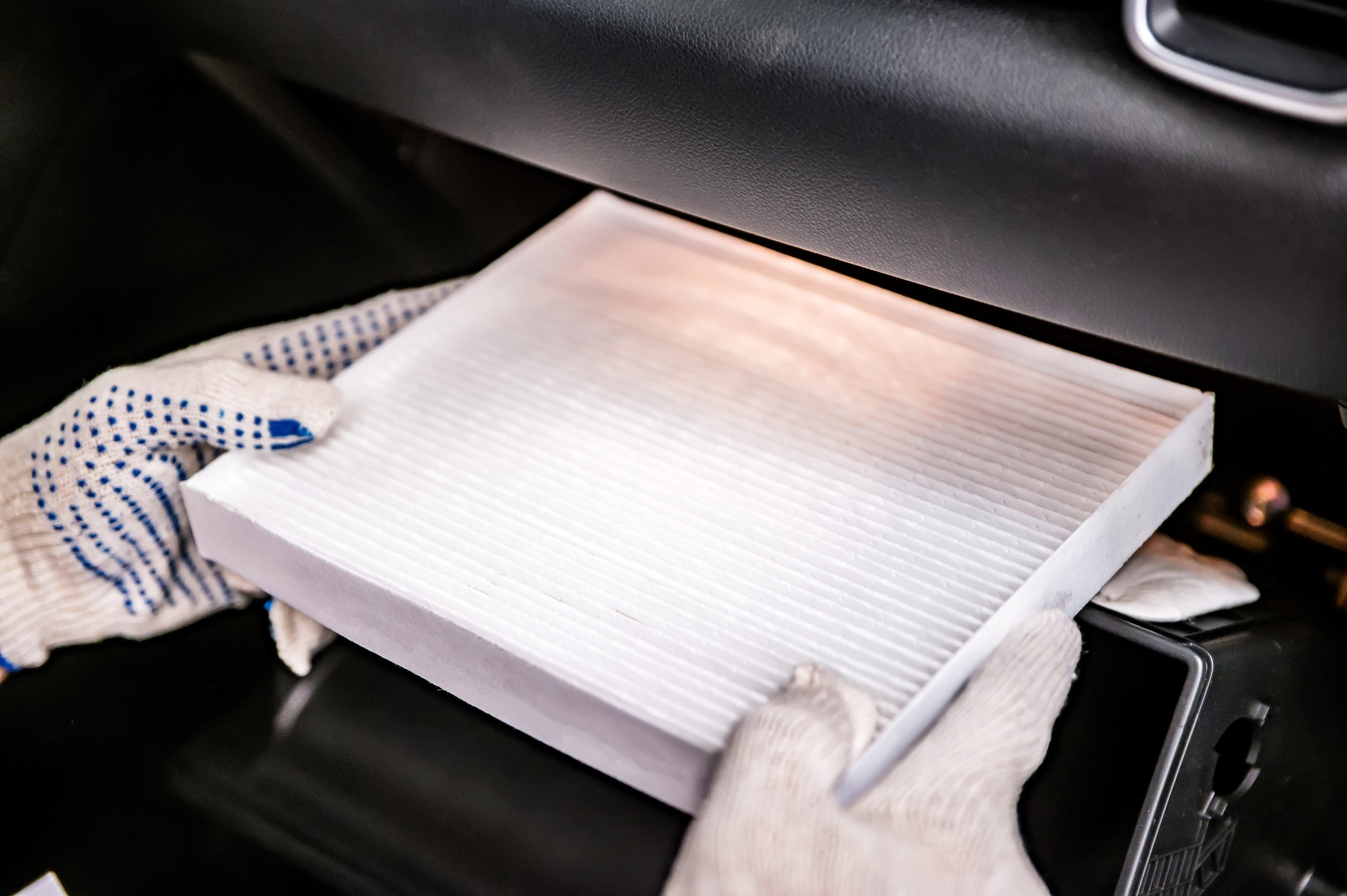
Your vehicle’s air filters do a lot for the cabin’s interior climate. They may not be in control of your temperature, but they do help prevent the intake of any particles or dust from the road. Your vehicle’s air filters also play a role in fuel efficiency, so let’s take a look at some ways they can impact fuel consumption.
What Do Air Filters Do?
When you engage your vehicle’s HVAC system, your vehicle draws air from outside of the cabin. This outside air can be filled with pollen, dust, dirt, and small particles that can accumulate inside your closed cabin if not filtered out properly.
Over time the filters can become overwhelmed with these outdoor particulates, which can begin to cause a number of issues for your vehicle.
Can Air Filters Affect Efficiency?
When your vehicle’s air filters become clogged, your HVAC system must work harder to provide you with the same level of temperature control. You will find yourself turning up the fan and adjusting the temperature more severely due to the fact that your AC can’t perform at its optimal level.
This causes your vehicle to use more energy, and more fuel. It’s especially detrimental in hybrid models and electric vehicles, as electric powertrains propel your vehicle and provide climate control through the same power source.
How Often Should Filters Be Changed?
To prevent your vehicle from overworking itself, it is recommended that your vehicle’s air filters be replaced around once a year. In miles, this comes out to roughly every 15,000 to 30,000 miles, depending on how much you drive.
Are your vehicle’s air filters in need of a replacement? Schedule your visit to the Champion Mazda service center online today. Let’s get your vehicle’s fuel consumption back on track with a simple part replacement.
Connect with us


